

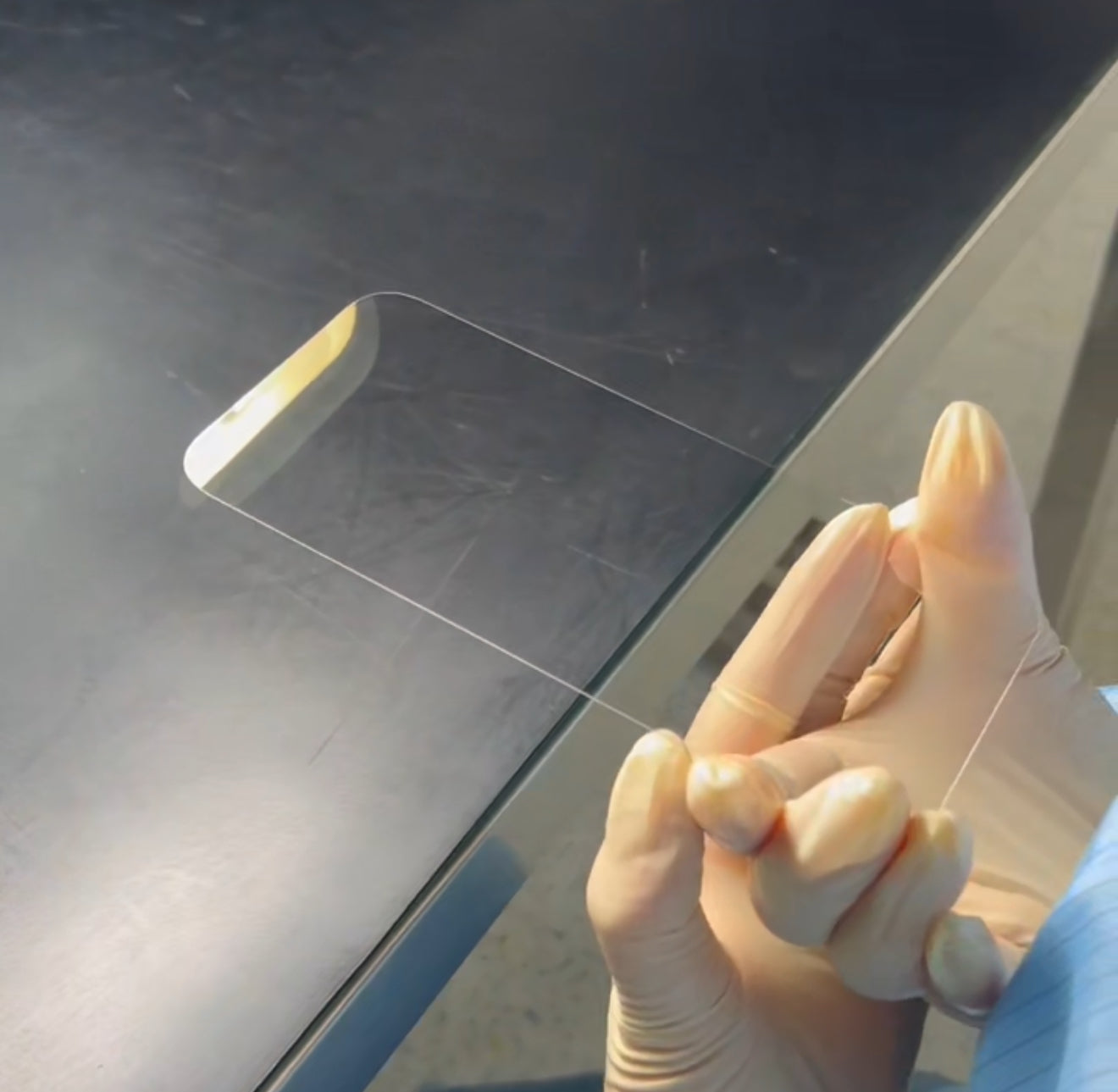
Sapphire screen protectors have long been viewed as a premium niche product, often costing significantly more than conventional tempered glass alternatives. After more than a decade of manufacturing refinement, Shellrus has announced a major pricing reduction, bringing its sapphire screen protectors into the same general price range as many premium tempered glass products on the market.
The company attributes the new pricing to over ten years of continuous improvements in manufacturing efficiency, yield optimization, quality control, and process refinement. These advancements have significantly reduced production costs while maintaining the material characteristics that have made sapphire desirable for applications requiring exceptional scratch resistance and optical clarity.
"We've spent more than ten years learning how to manufacture sapphire products more efficiently," said Mike Ye, founder of Shellrus. "In the early years, production yields were much lower and defects were much more common. Through continuous process improvements, we've been able to dramatically improve efficiency and reduce waste, allowing us to offer sapphire protection at a price point that was previously impossible."
In addition to manufacturing improvements, Shellrus began integrating solar energy into its operations in 2026. The company expects the transition to help offset a portion of its energy consumption while supporting long-term production sustainability.
Historically, consumers interested in sapphire protection often faced a substantial price premium compared to tempered glass products. Today, premium screen protectors from brands such as ZAGG, Belkin UltraGlass, FLOLAB, ESR, and TORRAS are commonly priced between approximately $30 and $60 depending on device model and feature set.
With Shellrus sapphire screen protectors now starting at approximately $30, sapphire protection enters a price category traditionally dominated by premium tempered glass products.
"Sapphire is not designed to be indestructible," Ye added. "Like other transparent protective materials, it can still crack under sufficient impact. Its primary advantage is scratch resistance and long-term optical clarity. Our goal has always been to make those benefits accessible to more people."
The company believes the new pricing will allow consumers to evaluate sapphire based on its performance characteristics rather than viewing it exclusively as a luxury upgrade.
For years, the question has been whether sapphire's benefits justify a significantly higher price than tempered glass. With pricing now approaching that of many premium tempered glass alternatives, Shellrus believes consumers can make that comparison on a more level playing field.
Share:
How Do We Produce Lab Sapphire
Test post